For Kinship Caregivers
You did not plan to raise another child. And here you are.
Grandparents, aunts, uncles, older siblings, cousins, close family friends. You said yes because love does that. The Wagon Method gives you a vocabulary, a picture, and a steady hand for a trail you did not choose but are walking anyway.
Stretch 3 · PrairiesYou know this feeling
You are holding the child and the family at the same time
You had a plan for this season of your life. Maybe retirement was supposed to be slower. Maybe your own kids were finally out of the house. Maybe you were the young aunt who just wanted a quiet apartment. Then a phone call came, and you said yes, because when the phone rings you answer.
Now you are raising a child you love and did not expect. The behaviors you are seeing are unfamiliar, the systems you are navigating are unfamiliar, and the grief sitting at your kitchen table is for people you love on more than one side of the story. It is a lot.
You are not looking for a program that talks down to you. You are looking for language, a map, and permission to keep going. That is what the method offers.
How the method fits
Warm, plain, and built for the unexpected caregiver
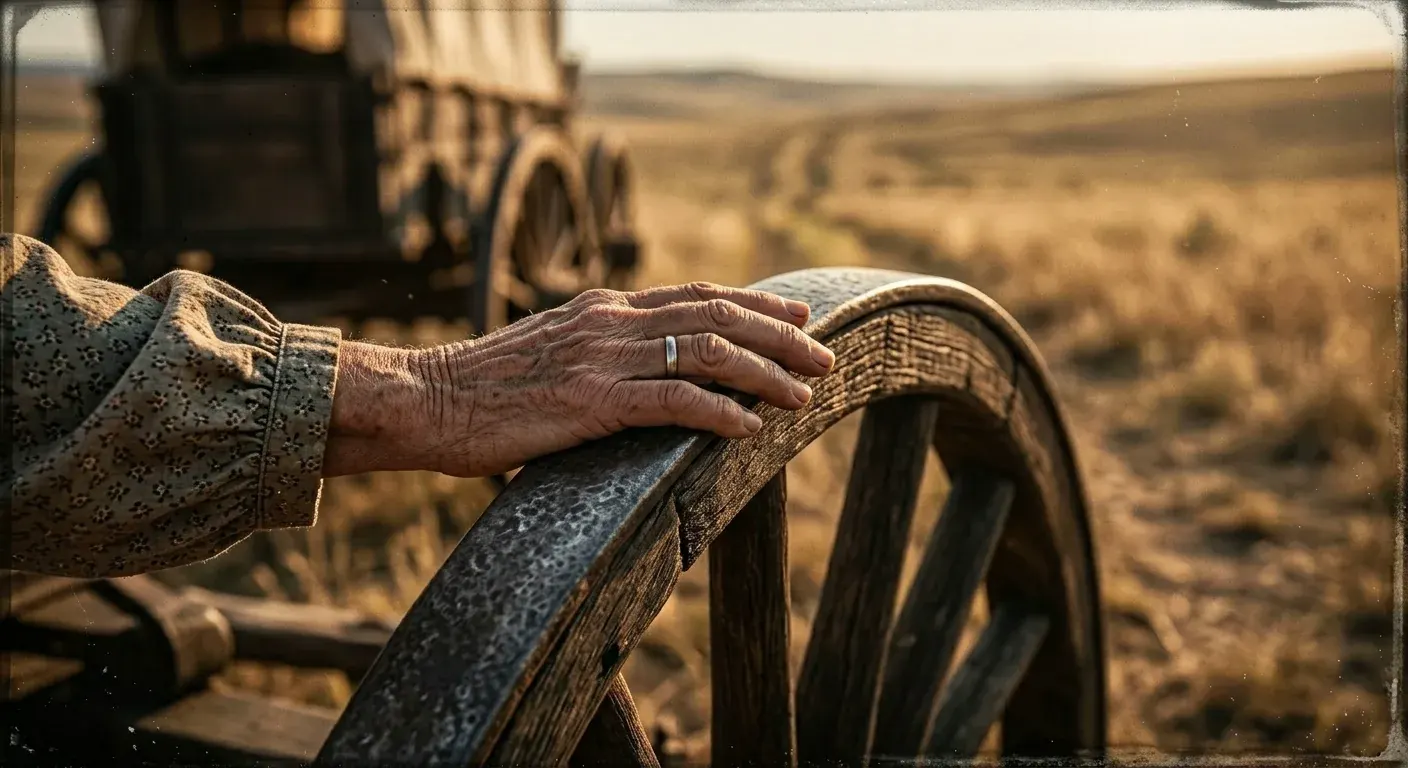
The Wagon Method was written for people who never planned on a clinical vocabulary. The words are everyday words, the picture is a covered wagon on a familiar trail, and the strategies are things you can try with what you already have at home.
Family stays in the picture
Bonds are part of the wagon
The Nurturing Network section treats family, friends, and community as part of a child's healing. Kinship care is not a fallback. It is a front-row seat to a bond that matters.
Systems made legible
Language for the hard rooms
When you can walk into a court, a school meeting, or a caseworker visit with shared vocabulary, you are no longer scrambling. You are describing the same child in words the professionals already know.
Permission to keep going
Paced for real life
Short modules. No jargon. Nothing that requires a quiet hour. You can read while the grandkids are at school, between appointments, or on the porch after everyone is asleep.
Your trail, three steps in
Here is what the first stretch looks like
What starts
A name for what you are looking at
In the first week, the behaviors you could not explain start to have names. The tantrum at bath time becomes a Safety spoke. The refusal to eat becomes a Stability spoke. The fierce love for a parent who hurt them becomes a Love and Acceptance spoke. Nothing gets fixed yet. Everything gets clearer.
What deepens
You become a translator in the hard rooms
By month two, you are bringing the framework into meetings. You can describe what your grandchild needs in words a caseworker understands. You can talk to the school about Safety and Identity wheels, not vague behavior concerns. You stop feeling dismissed and start feeling heard.
What changes over time
The family bond holds, because you know how to tend it
Months later, you notice that the bond between you and this child is deeper than you expected. You know how to name hard things without flinching. You know how to honor their history without rewriting it. You are tired and you are still walking, and you have people on the trail who understand both.
From kinship caregivers on the trail
Words from people a few miles ahead of you
“I am seventy one and raising my grandson. I never thought a website would feel like a friend. This one does.”
Grandmother, raising grandson since 2021
“I used the framework in family court. The judge asked me what was working at home, and I had an answer.”
Aunt and legal guardian
“I was terrified to talk about my sister with her daughter. The method gave me words that were honest and soft at the same time.”
Kinship caregiver
“I do not need fancy language. I need something that respects my time and my love. This is it.”
Grandfather, raising two grandchildren
Questions kinship caregivers ask
Before you sign up
I did not plan for this. Is it okay that I am tired?
Yes. Kinship caregiving is one of the most generous things a person can do, and one of the least resourced. Of course you are tired. The method does not ask you to be anything other than who you are. It gives you a place to stand and a vocabulary for what you are seeing, so the tired becomes less lonely.
How do I talk to my grandchild about their parent?
With honesty, tenderness, and a framework. The method treats the birth parent as part of your child's Grounded Experiences and Nurturing Network, not a topic to avoid. You do not have to erase the parent to love the child, and the method gives you language for that balance at different ages.
I am navigating court, caseworkers, and school at the same time. Can this help?
Yes. The method gives you a shared vocabulary you can use with caseworkers, judges, attorneys, and teachers. When everyone in the room can say Safety wheel instead of behavior problem, the conversation changes. You become a clearer advocate without having to become a clinician.
What if my relationship with the rest of the family is complicated?
It often is. Kinship care sits in the middle of family history, and the method does not pretend otherwise. The Nurturing Network section helps you think about who gets what role, how to keep the child's bonds intact where that is safe, and how to set limits where it is not.
I am not tech-savvy. Is this going to be complicated?
No. The reading is warm and plain, the modules are short, and you can do everything on a phone, a tablet, or an older laptop. If you can open a web browser, you can walk this trail. We have grandparents using the method every day.
Do I need to be a legal guardian to use this?
No. The method is for anyone raising a child in crisis, whether the paperwork is formal or still in progress. Temporary kinship, informal kinship, legal guardianship, or adoption finalized through kinship. The trail is the same.