About 21 minutes of reading
Where you are
Something has broken open.
Maybe it was last Tuesday, when the school called before nine in the morning and the voice on the other end was careful and formal in a way that made your stomach drop. Maybe it was a night last week when a door came off its hinges, or words got said that neither of you can unhear, or you sat in a parking lot afterward and did not know how to go back inside. Maybe it was a court date that ended in silence, or a phone call from a worker who used the phrase "placement stability" in a tone that meant something different from what it said.
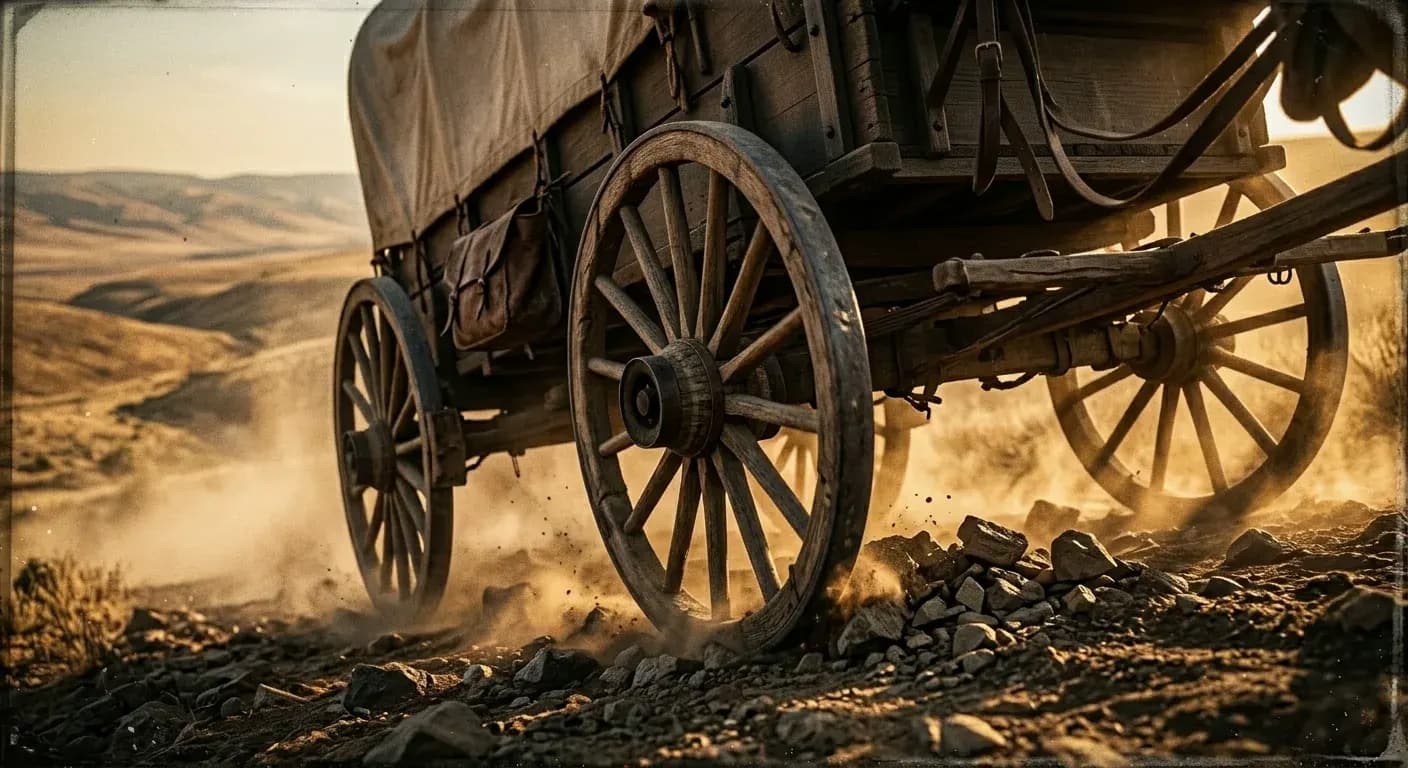
Whatever the shape of it, you are here now. The trail has tilted. The Prairies are behind you, and in the Prairies the work was hard but it was spread out, like a long flat pull with a headwind. This stretch is different. The grade is real. You can feel it in your legs, which is to say, you can feel it in your chest and your jaw and the part of you that keeps rehearsing the event at two in the morning.
First Climb is the first significant grade on the trail. It is the stretch that follows the surfacing that happened in the Prairies. The behaviors that were beginning to show themselves there have now shown themselves fully, or a new crisis has appeared that nobody anticipated. The child you have been learning to know has just given you a piece of their story that arrived with force.
Caregivers in this stretch ask questions that sound like these: Is this going to be the pattern from now on? Did I do something wrong to make this happen? What do I do when nothing I know how to do is working? How do I keep this placement together? How do I keep myself together? Who do I call?
Those questions are not signs that you are failing. They are signs that you are on a real climb, pulling real weight, and the trail has asked more of you than it has asked before. That is exactly where you are.
The child in your wagon is not broken. The child is on a trail of their own, carrying a load that was packed before you ever arrived, and the first significant climb is where that load shifts. This is the stretch where the kingpin of trust gets tested. Not destroyed, tested. And the way you move through this stretch will tell the wagon a great deal about whether the kingpin holds.
You are not alone on this grade. You are the primary pull. But there is a team around this wagon, and this is the stretch where that team matters most.
What is true in this stretch
The first thing that is true is that this stretch is real. It is not a detour, not a sign that something fundamental went wrong, not evidence that this particular child is beyond reach. First Climb is a named stretch on a trail that many, many wagons have traveled. The climb is hard because the child's nervous system is doing something that nervous systems do when they have finally arrived somewhere stable enough to let the old material move.
That is worth sitting with for a moment. The crisis you are in, or the one you just came through, often happens because the child has settled enough to be unsafe. The emotional wellbeing work that was building in the Prairies made enough room for what had been packed down to rise. This is not a failure of your care. In some cases, it is evidence of it.
The second thing that is true is that this stretch is uneven. It does not proceed in order. There are days that feel like the worst is over, and then a day that feels like day one again. There are moments of connection that you thought were no longer possible, followed by hours that contradict them. This is the terrain of First Climb. It does not proceed in a clean direction, and a day that goes backward is not a sign that the whole climb has reversed.
The third thing that is true is that the tools from earlier in the trail may not work the same way here. The rhythm that was steadying the child in the Prairies may be disrupted by the crisis itself. The rapport that was building may feel thin again. The words that used to work may not work right now. This is disorienting, and it is also normal on this grade. The wagon is heavier on the climb than it was on the flat. Some of what worked on the flat is not the right gear for a grade.
The fourth thing that is true is what is possible here. First Climb is not only a stretch of damage and rupture. It is also the first stretch where the repair that follows rupture becomes visible. A child who has never experienced a relationship that survives a hard event is watching you now to see whether this one will. The way you come back, the way you stay present, the way you do not leave, is information the child's nervous system is collecting and storing. You may not see the effect for weeks or months. But it is happening.
What is not yet possible here: a permanent return to calm. A resolution of the underlying history. A child who is changed by one good repair. You are in a stretch of repetition and steadiness, and the payoff will not be visible on this grade. That is honest, and it is important to say plainly.
The child's sense of belonging is genuinely uncertain to them right now. They may be testing whether this family is permanent or temporary. They may be testing at exactly the volume required to get an answer they can believe. The testing is not the problem. The testing is the question. Your job in this stretch is to be the answer.
What you can carry with you on this climb: the knowledge that other teams have been here, that the grade ends, that the Plateau is the next stretch and the Plateau has its own gifts. Not ease, not the absence of work, but a different kind of work. And to get there, you pull through here.
The work of this stretch
This is the part of the article that wants to hand you a list. Do not do this thing, do that thing, follow these five steps, and the climb will ease. That is not the trail. What follows is not a list. It is a description of the work that belongs in this stretch. Some of it you are already doing. Some of it will be new. Take what fits and leave what does not, because every wagon is different.
Stay in the yoke
The single most important thing you can do on this grade is stay. Not perform steadiness, not white-knuckle your way through, not pretend the climb is not steep. Stay. Show up tomorrow. Answer the phone when the school calls. Go back into the room after the rupture. Come to the table.
This sounds elemental because it is. The child in your wagon has likely, at some point, had people leave when things got hard. The data in their body says: this is the kind of moment when people go. Your job, again and again on this grade, is to be the exception that eventually rewrites that data. You cannot do it in one repair. You do it in the accumulation of returns.
Staying does not mean staying in an unsafe situation. If you are in physical danger, if the child is in physical danger, the work of the moment is safety first, and the return comes after. But the return comes. That is what staying means.
This is the moment to name something directly. If you are in a stretch where the child is expressing thoughts about hurting themselves or others, or where the events have moved into territory that an article cannot navigate, please do not rely on these pages alone. The 988 Suicide and Crisis Lifeline is available by call or text. Your child's care team, therapist, caseworker, and medical providers are the right people to be in contact with about specific decisions and specific risks. This article can orient you on the trail; it cannot replace the people whose job it is to know your child by name.
That said: the work of staying, of being the consistent adult who returns, is not something a crisis line or a caseworker can do for you. That is yours. And it matters more in this stretch than in any stretch before it.
Hold the structure when the structure is shaking
The Prairies were where you built the rhythms: the consistent meals, the bedtime that stayed close to the same time, the predictable transitions. First Climb is where those rhythms get tested, because crises are structurally disruptive. A hospitalization takes the child out of the home. A school crisis reshapes the day. A hard night stretches into a hard morning and the rhythm breaks.
Your job in this stretch is to restore the structure as soon as it is safe to do so. Not immediately, not before the dust settles, but as soon as possible. The same dinner table. The same check-in before bed. The same face in the morning. The wagon's secure, predictable environment is one of the few things that communicates safety to a nervous system that has just been through something. The structure is not a performance. It is a message. It says: the ground is still here.
Practically, this means being willing to let other things go in order to hold the core rhythm. The permission slip can wait. The phone call can be shorter. The errand can be tomorrow. What cannot wait is the presence at the table, the goodnight that happens even when both of you are depleted.
The child's comfort and adaptation may need attention in this stretch as well. A child who has been through a crisis often has a body that is dysregulated long after the acute event is over. Sleep may be disrupted. Appetite may change. Sensory sensitivity can heighten. Paying attention to the basics of physical comfort, the room that is not too loud, the clothes that do not fight the body, the food that is reliable and plain, is part of the structural work of this stretch. It is not separate from the emotional work. It is the ground the emotional work happens on.
Use the team
First Climb is the stretch where the solo pull becomes too much, if it has not already. This is the moment the trail guide's language about the wagon train becomes concrete.
The team around this wagon includes the child's therapist, if there is one. It includes the caseworker. It includes the medical provider. It includes the teacher who has known the child for two years and has a relationship that you do not want to lose right now. It includes the kinship member who shows up on Sundays. It includes the other foster parent in the support group who has been through a First Climb and came out the other side.
Calling on the team is not a sign of failure. It is not an admission that you cannot manage. It is the correct response to a grade. Oxen do not pull a loaded wagon up a hill without the rest of the team. The solo pull is what damages both the animal and the wagon.
In practical terms: call the therapist before the next scheduled appointment if something significant has happened. Send a note to the teacher. Reach out to the caseworker. If you have not yet connected with a support group for caregivers in your situation, this is the stretch to do it. Not because misery loves company, but because someone who has been on this grade knows which footing holds and which crumbles, and that knowledge is worth a phone call.
The team is not all professionals. The neighbor who will take the child for an hour so you can sit in a quiet room is part of the team. So is the person who will listen to you talk without trying to tidy it up. Identify who can give you a few hours of support this week. That is not a luxury. It is the maintenance that keeps the pull possible.
Work with the behavior, not against it
This is the stretch where caregiver instinct and trauma-informed practice are most likely to point in different directions, and it is important to name that tension honestly.
A child in a First Climb episode is often behaving in ways that are hard to be near: loud, dismissive, physically escalated, shut down, or some cycling combination of all of these. The instinct is to address the behavior directly, to name it, to apply a consequence, to bring it to heel. Sometimes that instinct is right. More often, in this stretch, the behavior is a message in a language the child has been speaking since before they had words.
The work here is not to ignore behavior or to permit harm. The work is to try, when you can, to respond to the message under the behavior before you address the behavior itself. This does not mean a long, analytical conversation in the middle of a dysregulated moment. It means a lowered voice rather than a raised one. It means a pause before a consequence. It means naming what you see, not what you want to see: "You seem like you're carrying something big right now."
After the acute moment, when both of you have regulation back, repair is possible. That is when the conversation about the behavior can happen. That is when the consequence, if one is warranted, can be given in a way the child's nervous system can receive. Repair is not the same as ignoring what happened. Repair is the return to connection that makes the next conversation possible.
None of this is fast. None of it works the same way twice. And none of this is something an article can customize for your child. Your child's therapist and care team are the right partners for figuring out which specific practices fit your child's specific history and needs in this stretch.
Care for the person in the yoke
You are the pull. If the pull breaks down, the wagon stops.
This is not a metaphor for self-care in the spa-and-nap sense. It is a structural reality. A caregiver in First Climb who has not slept more than a few hours in two weeks is not able to do the work of the steady return. A caregiver who has no one to talk to is at risk of doing the pull alone until they cannot. A caregiver who is not tending to their own nervous system is going to have less nervous system to lend.
What this looks like is small and specific: one person you can call. Eight hours of sleep on at least some nights, even if it requires creative logistics. A conversation with your own provider if what you are carrying has started to feel like more than a season on a hard trail. Permission to be depleted and to say so, to the right people, without guilt.
Foster parents, kinship caregivers, and guardians in this stretch often report a particular kind of shame: the sense that a trained or prepared caregiver should not be struggling. That shame is not the truth. The trail is steep. Struggling on a steep grade is not a character flaw. It is physics.
What comes next
The grade levels out. Not all at once, not on a schedule, but First Climb does not go on indefinitely. The stretch that follows is the Plateau.
The Plateau gets a mixed reputation among caregivers, and it is worth preparing you for that now. When the dramatic markers of First Climb begin to thin, when the crises space themselves out and the acute escalations come less often, the first response is relief. Enormous, falling-off-your-feet relief. You made the climb. You stayed in the yoke. The wagon is still moving.
But the Plateau arrives with its own strangeness. The visible progress that First Climb produced, however painful its form, gave you evidence that something was happening. On the Plateau, the dramatic markers stop appearing on the same schedule, and the work continues without the same visible signposts. Routines run. Check-ins happen. Days pass. The child is still in the wagon, and the wagon is still moving, and nothing dramatic is occurring. It is easy to wonder, on the Plateau, whether anything is working.
It is working. The Plateau is where the structure that survived First Climb begins to become the child's structure. The rhythms that were rebuilt after each disruption are becoming the rhythms the child has internalized. The steady return that you did a hundred times on the climb is settling into the child's nervous system as a known fact about this relationship.
The Plateau has its own forms of difficulty, its own detours, its own places where caregivers get lost. Those belong to their own guide. What you need to know here is that the Plateau is the next stretch, and it is a real stretch, and it holds genuine gifts if you know how to look for them.
Get through the grade first. The plateau is waiting.
How to know you are leaving this stretch
The leaving is rarely a single moment. It is a change in texture.
You will start to notice that the acute events are arriving less frequently, or that when they arrive, they resolve faster. Not always, and not without exception, but the pattern shifts. A week passes that did not have a new crisis in it. Then another.
You will notice that your first response to the child's escalation is less often bracing and more often something that resembles recognition. You know this pattern now. You are still pulled through it, but you are less surprised by it. That is not hardening. That is the specific kind of learning that only comes from pulling through a grade.
The child may begin to show small, unannounced moves toward you after a hard moment. Not always a verbal apology or a named repair. Sometimes it is just appearing in the room you are in, or accepting a meal, or making brief eye contact at a moment when they used to go somewhere unreachable. These are not guarantees that the climb is over. They are signs that the kingpin is holding.
You will also notice a change in how you talk about the child when they are not in the room. The questions shift from "what is happening to us" to "what is happening for them." That shift is a quiet signal that you have begun to see the behavior as the message, and the message as workable, rather than the behavior as the event that defines the stretch.
The Plateau does not announce itself. You will likely recognize the First Climb in retrospect, looking back at a stretch that had a beginning and an end. That is appropriate. Most stretches are only nameable from a little distance.
Trust the texture. When the climb starts to level, you will feel it in the pull before you see it anywhere else.
Common detours
Every stretch has its predictable places where caregivers leave the trail. First Climb has a few that appear often enough to name.
The rescue detour. This is the pull toward doing more and more of the child's regulation for them, taking on an increasingly large share of the emotional labor of the relationship, trying to prevent the next crisis through comprehensive management of the child's environment and schedule. The rescue detour feels like care. It often is care, in its motivation. But it does not give the child the practice of returning to regulation themselves, and it is not sustainable for the person in the yoke. If you find yourself managing every transition, pre-empting every trigger, and running ahead of every possible difficulty, you may be on this detour. The return is not to do less caring. It is to put some of the work back in the child's hands, at the level they can hold it.
The certainty detour. First Climb often produces a strong pull toward diagnosis, toward labels, toward a definitive explanation that will tell you exactly what you are dealing with and exactly what to do about it. This is understandable. The uncertainty of the climb is exhausting, and a name for what is happening feels like solid ground. The detour is when the search for certainty leads you away from the child in front of you and toward a category. Your child's care team is the right partner for diagnostic questions. The article's word for this stretch is specific and honest: behaviors consistent with a history of early disruption often look like many things, and the name matters less on most days than the steady return.
The isolation detour. Some caregivers in First Climb go quiet. They stop talking to the support group. They stop calling the friend who has been through something similar. They put their head down and pull. The reasons are understandable: shame, exhaustion, the sense that no one who has not lived this can understand it, the fear that if they say what is really happening, something administrative will occur. The isolation detour is dangerous on a grade because it means the team is not in contact with the team. If you have gone quiet, consider making one phone call this week. One. To someone who knows your situation and can hold what you tell them.
The timeline detour. This is the expectation, spoken or unspoken, that First Climb will be over in a specific number of weeks, that after one good repair the relationship will restabilize, that the child who showed up for two connected days in a row is now through the grade. The timeline detour sets up a particular kind of crash when the climb continues past the expected date. The trail does not move on your schedule. The climb ends when it ends. The work of this stretch is the same on day four as on day forty: stay in the yoke, hold the structure, use the team, tend to yourself.
The way back from any detour is the same. You notice where you are. You do not spend long cataloging how you got there. You return to the trail. That is all. The return is always available, and the trail does not penalize you for having left it.
You are on a real climb. The wagon is still moving. Keep pulling.