About 19 minutes of reading
Where you are
You are in the long middle.
The early urgency has settled. The crisis calls have spaced out, or they have changed character. The child is no longer brand new to your house. You know their face in the morning. You know which sounds coming from the hallway are neutral and which ones mean you need to get up. You have been doing this long enough that some of the practices have become muscle memory, and that is a good thing, but it also means the days can start to feel like repetition without progress.
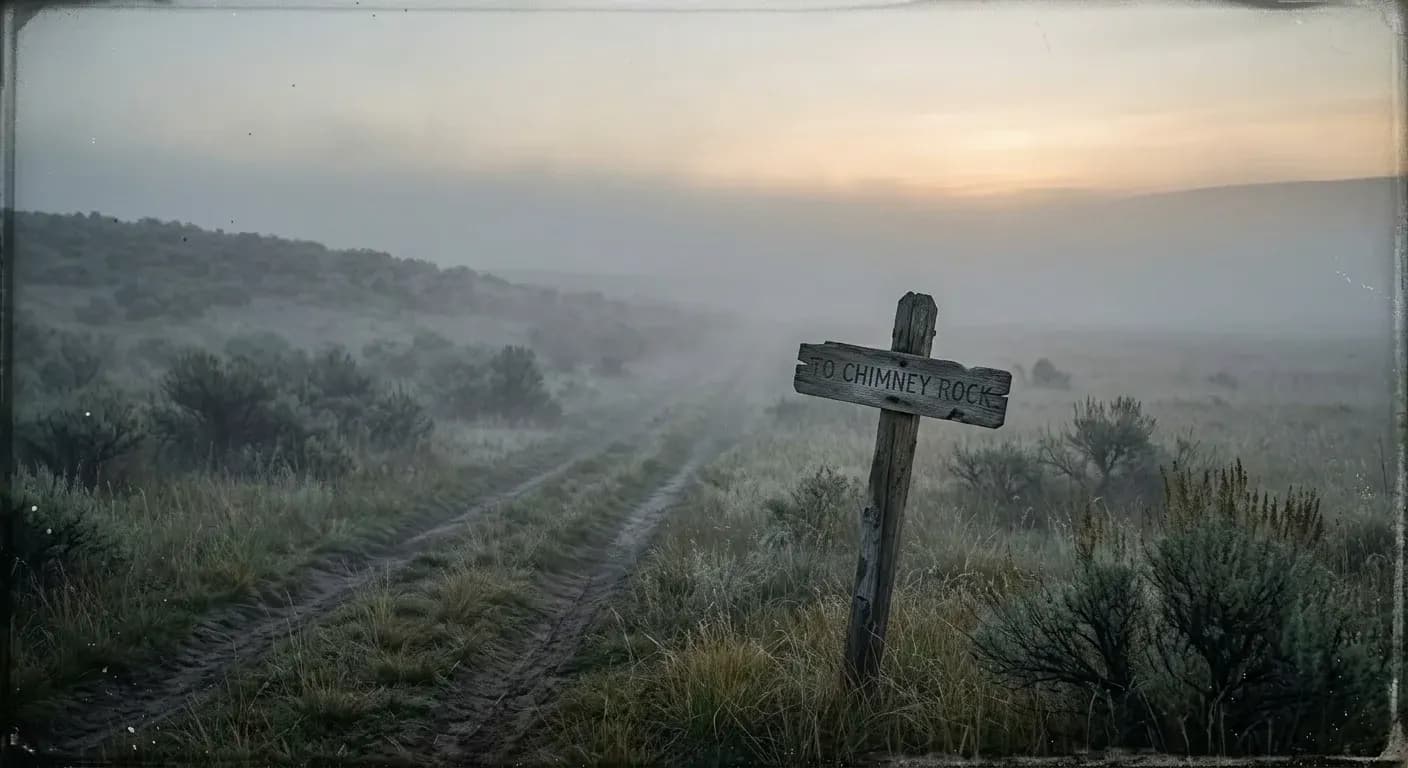
This is Prairies.
The name matters. A prairie is not a wasteland. It is not a valley or a waiting room. It is a particular kind of terrain that asks a particular kind of endurance: the ability to keep moving when there is no dramatic landmark to tell you how far you have come. The trail here is wide, the horizon is real, and the ground underfoot is solid. But it looks almost the same today as it did six weeks ago, and that can do something to a caregiver's sense of direction.
The questions you are asking in Prairies tend to sound like this. Is anything actually changing? Am I doing this right if I can't see the results? How long is this supposed to take? The child seems fine at school and then comes home and unravels. We had a week that felt like a breakthrough and then it was like it never happened. I thought we were past this.
Those are prairie questions. They are honest. They are also, in their way, a sign that you are doing the work. The caregivers who ask those questions are the ones who stayed through First Climb, the ones who built the foundation, and the ones who are now in the stretch where the building feels invisible.
Here is what is true about where you are. The wagon is moving. You are yoked to it and pulling. The child inside it is doing something that does not look dramatic from the outside but is, in fact, the deepest kind of labor: they are beginning to trust the road. Not fully. Not without reversals. But the axles are turning, and the kingpin of trust, which is the central pin that holds the whole wagon together, is holding in ways it could not hold before you got here.
That does not make the prairie easier to walk. But it may make it easier to stay.
What is true in this stretch
The prairie is long by design. Not by mistake, and not by failure. The nervous system does not move on a schedule that fits the calendar year. The architecture of trust, the kingpin that holds wheel to frame and frame to road, is built slowly. It is built through repetition. It is built through the discovery, repeated hundreds of times across months and years, that the adults who said they would be there were there. That the dinner was on the table again. That the consequence came as described and was survivable. That the rupture was followed by a repair. That the repair was real.
The child is accumulating that evidence right now. You cannot watch it accumulate. You can only keep making the deposits.
The Safety wheel is the primary terrain of Prairies. The hub that does the most work here is the Secure and Predictable Environment hub, the one that covers household rhythms, consistent routines, and the quiet architecture of a day that the child can begin to predict. The child's nervous system, which spent a long time scanning for threat, is beginning, tentatively, to use that architecture as a reference point. This does not happen loudly. It happens in the small shift from a child who could not eat without watching the door to a child who, sometimes, eats with their back to the door. From a child who flinched at the sound of a key in a lock to one who recognizes the sound as yours and relaxes a half-second before you enter.
You may not have noticed those shifts. They are easy to miss. But they are happening.
What is hard in Prairies is real, and it deserves to be named plainly. The emotional spikes have not ended. Behaviors that feel like backward steps will appear, often without warning, often after a stretch that felt like progress. The clinical term for this is regression, but on the trail it looks like: the child who seemed to be sleeping through the night is awake again at three in the morning. The child who had three good weeks at school picks a fight that results in a call home. The child who told you something real about their past goes quiet for two weeks after the telling.
These are not evidence that the trail is circling back. They are evidence that the child is testing the ground. They are asking, without words, whether the road holds under full weight. Your job in Prairies is to keep being the road.
What is not yet possible in this stretch also deserves honesty. The deeper work of identity, the child's growing sense of who they are and what they value, belongs to later terrain. The full attachment that is sometimes described as the moment everything clicked is not a prairie arrival; it is the view from a different stretch. Prairies does not ask for that. Prairies asks for steadiness without the reward of certainty.
Some caregivers find that harder than the crisis work of First Climb. In First Climb, the urgency told you what to do. In Prairies, you have to keep choosing the work without the urgency to drive you. That takes a different kind of strength. It is worth naming that you are using it.
The work of this stretch
The prairie's work is not glamorous. It will not make a good story for the summary report, because the summary report wants milestones and the prairie does not traffic in milestones. What the prairie traffics in is daily practice, repair, and the slow construction of a child's working sense of safety. The sections below name the specific work that belongs here.
Holding the structure when the child tests it
The child will test the structure. This is not misbehavior in the ordinary sense. It is inquiry. The child is asking a question that their history has given them good reason to ask: what happens when I push? Does the ground hold? Do the adults get flooded, get punitive, get distant, get gone?
Your answer to that question is not the speech you give after the test. It is the shape of your response in the moment. A secure and predictable environment is not an environment where nothing goes wrong. It is an environment where the responses to things going wrong are predictable, proportionate, and followed by a return.
The work here is twofold. First, hold the structure: the rule stands, the consequence follows as described, you do not abandon the expectation in the face of escalation. Second, close the loop: after the heat is gone, after both of you have had the space to come back down, return to the moment. Not to relitigate it. To repair it. The child needs to learn that rupture is survivable and that repair is real. They can only learn that if the repair happens, consistently, over a long time.
You do not have to do this perfectly. You have to do it enough. The repair after an imperfect response is itself part of what you are teaching.
Co-regulation as a daily practice, not an emergency measure
In First Climb, co-regulation was often something you did during a crisis. You brought your regulated nervous system to a dysregulated moment and tried to hold steady until the wave passed. In Prairies, co-regulation expands beyond the crisis. It becomes the daily tone of your presence.
This is a subtle shift. What it means in practice is that you are thinking about the emotional wellbeing hub not only during the hard moments but across the whole day. The calm morning greeting before the child is fully awake. The dinner table without a screen. The car ride where you do not ask about school in the first two minutes. The bedtime that has a shape the child recognizes.
These are co-regulation. They are the ongoing work of lending a regulated nervous system to a child who is still, in many ways, borrowing yours.
Many caregivers find that the prairie is where they start to lose track of this work because it no longer feels urgent. The crisis-co-regulation was obvious. The daily-tone co-regulation is easy to deprioritize when there are a hundred other things to manage. The difficulty is that the daily tone is, in some ways, the more important one. It is the water the child is swimming in, not the life preserver.
You might consider auditing the shape of an ordinary day, not a hard day, and asking yourself: what is the emotional tone I am setting before the child has done anything? That is the question Prairies asks.
Staying connected to the care team
The prairie is often where caregivers start to drift from the wider care team. The early intensity of placement usually involves more contact: more check-ins with the caseworker, more frequent therapy appointments, more calls. As the acute phase settles, the contact often settles with it. That is appropriate in some ways, but it carries a risk.
The risk is that you begin to carry the prairie alone.
The team that is pulling this wagon, the therapist, the caseworker, the school counselor, the biological family members who are part of the child's life, the other adults who know this child, does not disappear in Prairies. They are still part of the rigging. The wagon needs all of it.
Staying connected in Prairies means a few specific things. It means keeping scheduled appointments even when things feel stable, because the therapeutic relationship the child is building in the counselor's office is doing work that does not show up in the child's daily behavior. It means reaching out to the caseworker before a small concern becomes a large one. It means being honest in those contacts about how you are doing, not only about how the child is doing.
This is also the moment to name plainly what an article can and cannot do. This piece is orientation. It names the terrain, holds the shape of the stretch, and offers the caregiver a sense of where they are. It is not a substitute for the child's care team, for a therapist who knows this child's specific history, for a physician who manages any medical needs. If you are noticing behaviors in this stretch that concern you, including anything that touches self-harm, significant withdrawal, talk of hopelessness, or a level of aggression that feels unsafe, please reach out to the child's care team now. The 988 Suicide and Crisis Lifeline is available by call or text for both children and the adults who love them. The prairie can be a hard stretch, and you do not have to navigate the hardest parts of it alone.
The caregiver's interior work
Prairies is where caregiver depletion sets in if it is going to. The adrenaline of First Climb is gone. The visible progress is slow. The work is daily and repetitive and the markers of success are not the kind you can point to in a conversation.
This stretch has a way of asking caregivers: do you believe in the road, or were you believing in the destination?
That is not a question to answer out loud. It is a question to sit with, honestly, and to bring to the people in your own life who can hold it with you. The wagon needs you yoked to it for the long pull. That means you need to be fueled. Not perfectly. Not heroically. But enough.
The caregiver's interior work in Prairies includes, at minimum: naming honestly to at least one other adult how the stretch is feeling. Identifying what is depleting and what is restoring. And holding loosely the expectation that the child's progress will validate your effort on any particular timeline. The validation comes, but it tends to come from a direction you were not watching, on a day you were not expecting it, after you have mostly stopped looking.
Caregiver support groups, informal networks of other foster or kinship caregivers, conversations with a counselor of your own: these are not luxuries in Prairies. They are part of how the oxen stay healthy enough to pull.
Noticing and naming the small
One of the specific skills the prairie asks for is the ability to see small change and name it honestly, without inflating it into breakthrough and without dismissing it as nothing.
A child who used to leave the table after two minutes sits for eight. That is not nothing. A child who could not make eye contact during conflict holds your gaze for a moment at the end of a hard conversation. That is not nothing. A child who has never asked for help with homework leaves a worksheet on the kitchen counter where you will see it. That is not nothing.
These are kingpin moments. They are the small evidence of trust accumulating. They are easy to miss because they are not dramatic, and they are easy to over-celebrate in a way that makes the child retreat. The practice is quieter than celebration. It is a steady noticing, a brief acknowledgment, and then a return to the ordinary day.
You might consider keeping, for yourself, a simple record of these small moments. Not a chart, not a system, not a metric. A line or two at the end of the day. Over the course of weeks, the record will show you things the day-to-day cannot: that the child who ate breakfast in silence in February ate it asking questions about your week in May. The prairie is long, and the record gives you a way to see the distance you have covered.
What comes next
The terrain ahead is called the Long Meadow, and it is different from Prairies in ways that will matter to you.
If Prairies is the stretch where you are doing the work without yet being certain it is landing, the Long Meadow is the stretch where you begin to have evidence. Not proof, not a clean arrival, but evidence. The child begins to show you, in larger and more consistent ways, that the kingpin is holding. They ask to come back after a rupture. They tell you something true about their interior life without being asked. They navigate a hard moment and recover from it faster than they would have a year ago.
The Long Meadow has its own demands. The attachment work deepens there, and with it the vulnerability on both sides. The child who has been guarded is beginning to let the guard down, which means the stakes feel higher, not lower. Caregivers sometimes find the Long Meadow harder than Prairies precisely because the child is now more visibly their own, and there is more to lose.
You are not there yet. The prairie asks you to stay here, in this stretch, and do the slow work that makes the Long Meadow possible.
It is worth knowing that the transition from Prairies to Long Meadow is rarely a clear line. Most caregivers look back and realize they had already left the prairie before they knew they were leaving it. The markers come in retrospect. You will not receive a notification. You will notice, one day, that the questions you are asking have changed.
How to know you are leaving this stretch
The leaving shows up in the small and the ordinary, which is fitting for a stretch that was always about the small and the ordinary.
You notice that the daily practices no longer require you to remember to do them. The repair after a hard moment has become reflexive. The co-regulation is the tone of the day, not a technique you deploy during a crisis. The structure is still there and so is the child, and the child's relationship to the structure has shifted: they no longer seem to be testing the floor every time they step on it.
You notice that the child's body is more at ease in the house. Not always, not completely, but often enough that the ease has become the baseline instead of the exception.
You notice that the questions you are asking about the child have changed. You are asking less about whether the foundation is holding and more about what is actually happening inside the child, what they are curious about, what they are afraid of, what they want for themselves. Those are Long Meadow questions. The fact that you are asking them means the prairie has done its work.
The child notices you in ways that were not there before. Not dramatically. But you come home and there is a small recognition, a small lean toward you. The child brings you something from their day, literally or in words, in a way that says: I wanted you to have this.
That is the thing the kingpin was built for. The trust holding under full weight.
You will not mark the moment it happened. But it happened here, on the prairie, in the long middle where the work was invisible and you stayed anyway.
Common detours
Every stretch has its predictable wrong turns. The prairie has a few that appear often enough to be worth naming.
Chasing the breakthrough. The prairie's flatness can cause a caregiver to begin reaching for dramatic evidence of progress. A retreat is planned, a big conversation is initiated, a new approach is introduced, not because the trail called for it but because the caregiver needed to feel the wagon moving. The risk is that the child's system, which was just beginning to settle into the reliable rhythm, gets disrupted by the reaching. Prairies does not reward the reach. It rewards the steady.
If you notice yourself cycling through new approaches faster than any approach has time to take root, that is a signal worth sitting with. Bring it to the care team. Name it out loud. The prairie is not asking for innovation. It is asking for presence.
Settling into management instead of relationship. The days become efficient. You know the routines. The child knows the routines. Everything runs. And somewhere in the running, the quality of attention shifts from relationship to logistics.
This is a quiet detour. It does not look like failure from the outside. But the unconditional love hub is not served by efficient management. The child needs to be seen, not only provided for. The detour back from this one is usually simple but not small: you sit down with the child and do nothing together. No agenda, no lesson, no productive outcome. Just time that belongs to the relationship.
Losing the care team. Already named above in the work section, but worth restating here as a common detour because it is one of the most predictable in Prairies. The stability of the stretch creates the illusion that the team is optional. It is not. If you have drifted from regular contact with the therapist, the caseworker, or other members of the team, find your way back. One phone call. One honest check-in. The rigging needs all the hands.
Comparing the timeline to someone else's. Another family, another caregiver in the support group, another child who arrived at the same time and seems further down the trail. This comparison is a specific kind of suffering that Prairies invites, because the prairie offers so few visible markers of your own. Every child's journey is its own trail. Yours is not behind someone else's. It is simply yours.
Neglecting yourself until the engine starts to fail. Prairie depletion is real. It comes slowly. It does not announce itself with a crisis; it accumulates across months of ordinary days until one morning you realize you are pulling the wagon on a reserve you did not know was running out. The signal is usually not dramatic. It is a flatness in your own affect, a shortening of your patience, a sense that the work that once felt meaningful now just feels like work.
If you recognize that signal, do not push through it alone. Reach out to your own support, whatever that looks like for you. The wagon cannot afford to lose the team that is pulling it.